
Heavy cargo. Nobody on board.
From take-off to landing, Flightbrain flies the whole flight. Built for the same airspace as crewed traffic: between civil airports, over cities and across borders. Pick a point along the way.
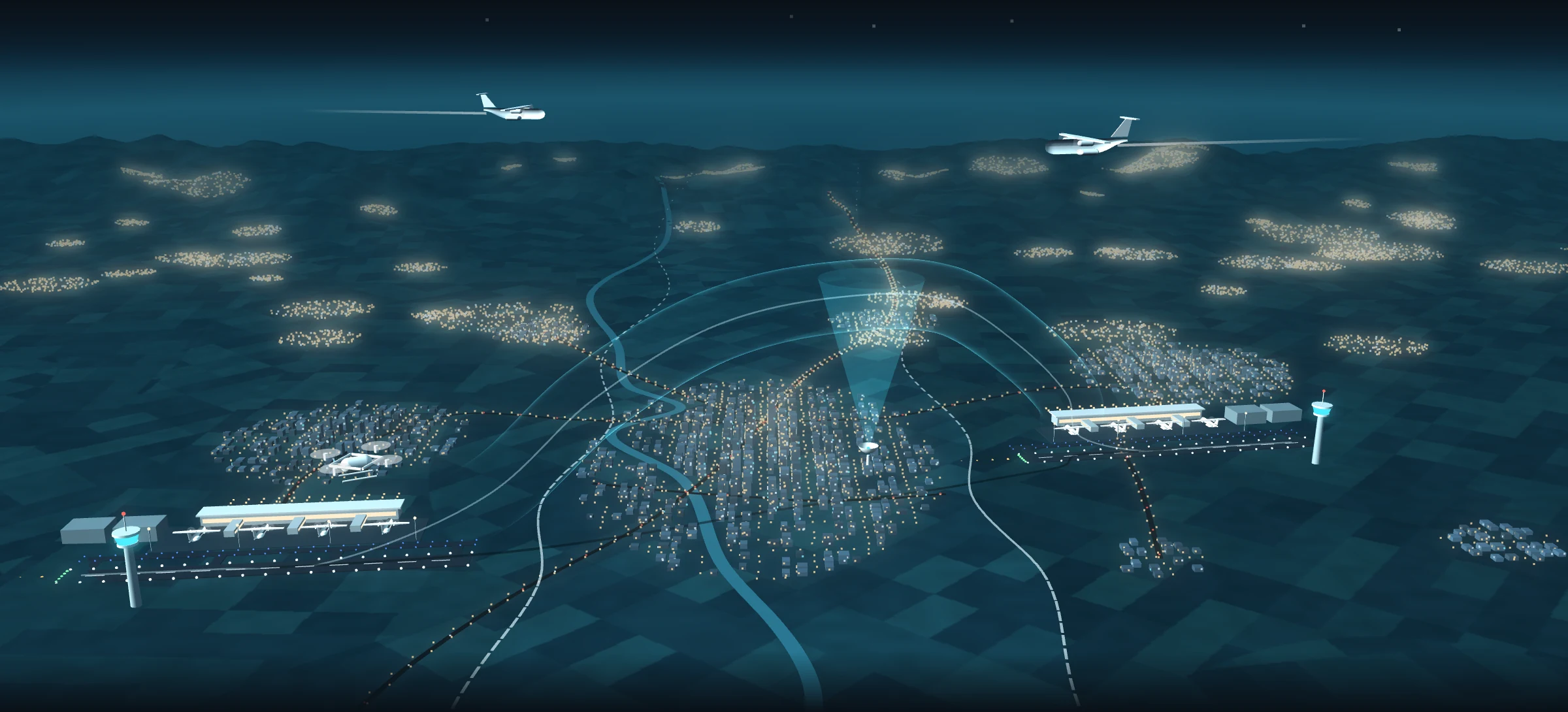 MONITORED FLIGHT ENVELOPE
RADAR
DRONE
ATC
ATC
BORDER
BORDER
It takes off on its own.
Taxi, line-up, take-off roll and climb-out are flown by Flightbrain. Nobody is on board.
It communicates with ATC.
Flightbrain hears the controller, reads the clearance back and checks it before it is flown.
It communicates with other aircraft and drones.
It follows the traffic on the frequency and around it, and keeps its distance.
The safety monitor decides.
Flightbrain checks every instruction it receives. Every manoeuvre is checked against the flight envelope, and the Deterministic Safety Monitor decides what is flown.
It lands on its own.
Approach, touchdown, roll-out and taxi to the stand, cleared by ATC.
The same core, further out.
The further a spacecraft flies, the longer the ground needs to react. Flightbrain is built to close that gap: the decision is made on board, and a deterministic safety monitor keeps it inside the mission envelope. Pick a point on the way out.
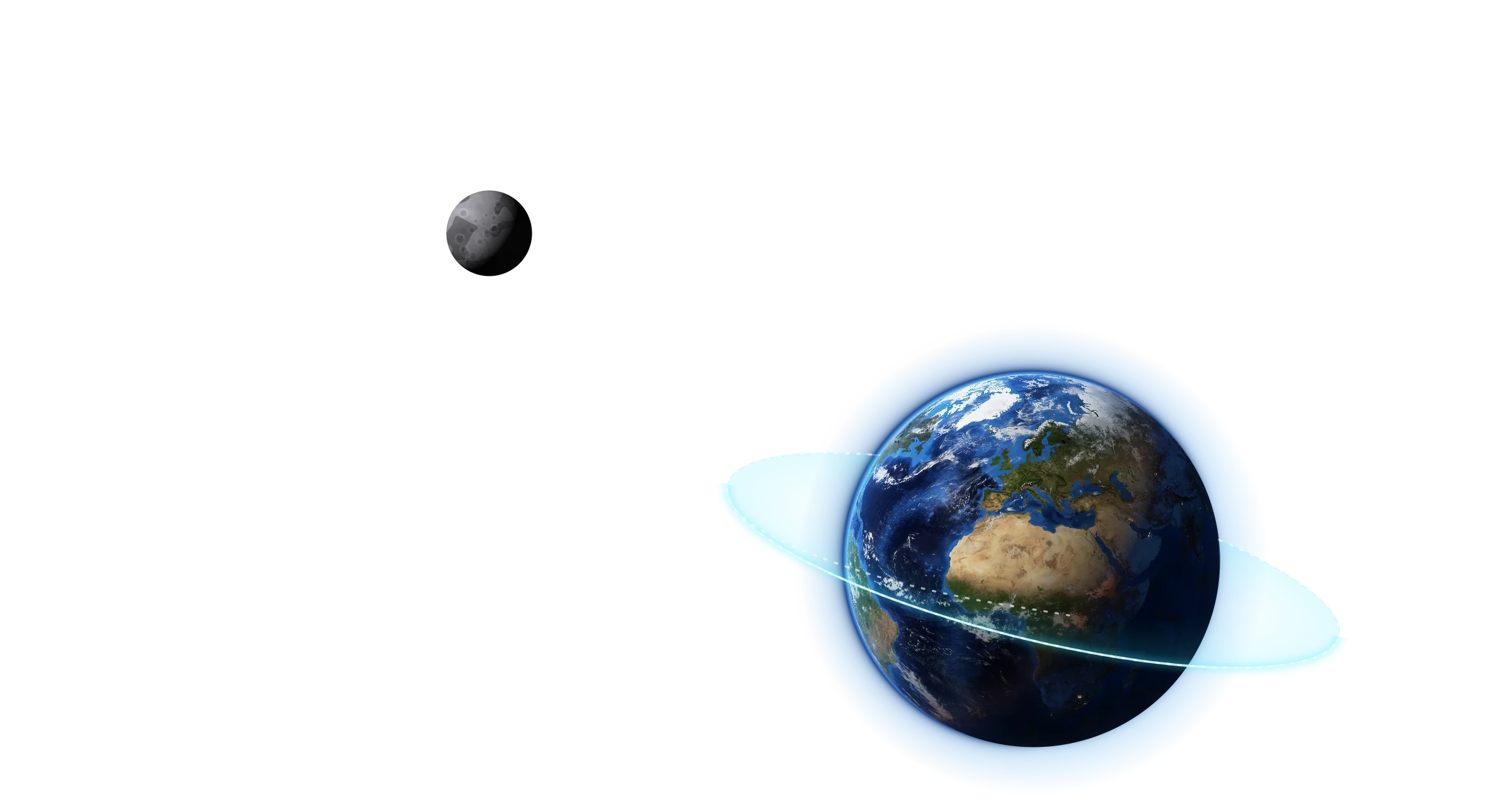 ISS
Flight termination for European launchers
An independent envelope monitor follows the trajectory. It holds the veto when the vehicle leaves its corridor.
Rendezvous and in-orbit servicing
A guardian for corridor, keep-out zone and abort. The autonomy flies the approach. The monitor decides whether it may continue.
Dense satellite constellations
Flightbrain Warden is the separation monitor for collision avoidance, safe failure behaviour and end-of-life disposal. The autonomy proposes the manoeuvre. The monitor holds the minimum distance to the neighbours.
Lunar landing
A monitor for descent and touchdown, the phase that cannot be paused or repeated.
Guidance, navigation and control
For spacecraft that fly for months without ground contact, such as Earth to Mars. By the time the ground hears of a problem, it is over.
How Flightbrain works.
The problem, the architecture, and the same core in aircraft and spacecraft.
AI proposes. The safety monitor decides.
Flightbrain keeps intelligence and authority apart. The parts that learn may propose. The part that has to be certified is deterministic, and it has the last word.
Flies the vehicle
Deterministic flight control with the Deterministic Safety Monitor. Every command is tested against the flight envelope. What falls outside is refused, whoever asked.
Understands and proposes
Hears and interacts with ATC, follows other traffic, plans the mission and proposes routings that save time and energy. It has no path to a control surface or a thruster.
Keeps people in charge
One operator supervises several vehicles from the ground, with continuous surveillance of flight data, map and camera in one view.
Building an autonomous aircraft or spacecraft? Let's talk.
Contact usOne codebase. Three authorities.
Aviation and space ask for the same thing in different words: show that the software does what it should, and nothing else. We write Flightbrain once, against all of them.
Committed to the rules of EASA and ESA from the first line of code.
Three authorities, one deterministic codebase.
The organisation is set up for design, production and quality approval.
Software, hardware and environmental qualification, for aviation and space.
How Flightbrain reaches your vehicle
License Flightbrain as software only, or together with our reference DAL-A flight computer.
Port the hardware-agnostic layer to your own flight computer, or put the Deterministic Safety Monitor in front of your own autonomy.
One codebase arrives with its compliance evidence for aviation and space, so your programme does not start from zero.
Flightbrain is currently being tested on prototypes.
Flown and tested on a demonstrator with 24 kg MTOW.
Our own machine-learning model, trained in-house to communicate with air traffic control.
The safety monitor for satellite constellations, in simulation: formation flight, veto and failure cases.
Next: a demonstrator developed in accordance with ECSS.
Contact us for further information.
We understand airworthiness from the inside out.
Aerean Dynamics develops flight control built for certification, for autonomous aircraft and spacecraft. The team brings more than 70 years of combined experience: over two decades of aircraft certification from CS-23 to CS-25, with three design and production organisations built and taken through approval, 18 years of DAL-A flight software and 35 years in finance. We are in discussions with partners in logistics, aerospace and research.
A Swiss company, based in Schaffhausen. We work for civil aviation and space.
Tell us what you fly.
Aircraft makers, operators, space teams and engineers who want to build this with us: write to us.